Subscribe to Our
Newsletter
Stay up here to get the latest news, updates
and special offers delivered directly to your inbox.

Explore new cultures through local culinary experiences Book your local food expedition While travelling to a new place, we all wish that we could know more about the culture, people and their experiences. Now, you can. With Our Neigbrhood, you can get yourself an immersive cultural experience hosted by locals who are earnestly waiting to host you for a gourmet experience and share the stories about their Neigbrhood.
Get ready to create your own unique travel adventure!
Our Neigbrhood not only provides travellers with an opportunity to explore and experience the local culture and global cuisine in a very personalised set-up but also allows the local community members to experience other cultures.


Explore the flavors of 13 distinct global cuisine categories packaged with the stories of local traditions, culture, and personal experiences of the host.

African Indigenous cuisine is characterised by the use of an extensive range of foods including fruits, nuts, bulbs, leaves and other products gathered from wild plants and by the hunting of wild game. Consisting primarily of cooked grains, especially sorghum and millet,
fermented milk (somewhat like yoghurt) and roasted or stewed meat, African cuisine is a generalised term collectively referring to the cuisines of Africa. This diverse culture is also reflected in the many local culinary traditions in terms of choice of ingredients, style of preparation and cooking techniques.

Non-indigenous African Cuisine or Afrikaans Cuisine evolved from what was available to them from their own land. Meat has always been a major part of this style of cooking.The Afrikaner developed the cooking of meat
over an open fire into an art form known as the braai, which is the Afrikaans word for barbecue. Today, South Africans are proud of this important part of their culture, and it remains a characteristic of the local cuisine.Whether in the garden at home, on a beach that allows fires or on a hike or picnic, braaiing is the cuisine of choice for many. Common braai meats include sosaties (kebabs), chops, sausage(known as boerewors), steaks and chicken pieces. This is often served with accompaniments such as stywe-pap (usually with a gravy or tomato and onion relish), corn on the cob, homemade beads or salads.Stews are another popular Afrikaans dish, especially those cooked in a three-legged cast-iron pot. This is known as potjiekos. It comprises meat (white or red), potatoes and plenty of vegetables, cooked slowly over hot coals until the meat is tender and the vegetables soft. Red or white wine is frequently added for flavour. This is then served on rice.Most famous of all Afrikaner desserts are, undoubtedly, melktert (milk tart with cinnamon) and koeksusters (plaited pastries that are steeped in syrup and sometimes dusted with coconut). Jams and marmalades are also important parts of the Afrikaans table, and can be made using just about any fruit. Common preserves are watermelon, fig, quince and apricot.
Visitors from all over the world are sure to enjoy the flavors of Afrikaans cooking. However, this cuisine comes with a warning – the portions are simply huge

Cape Malay cuisine is a cuisine peculiar to Cape Town. It is typically a mix of traditional South African dishes, especially of the West Coast, with Malaysian, or Eastern influences. The Cape Malay cuisine is usually aromatic,
with distinct flavors of a myriad of oriental ingredients.

British cuisine is the heritage of cooking traditions and practices associated with the United Kingdom. Although Britain has a rich indigenous culinary tradition, its colonial history has profoundly enriched its native cooking traditions.
British cuisine absorbed the culturalinfluences of its post-colonial territories – in particular, those of South Asia.

Indian cuisine is the general term for the wide variety of cooking styles from India. Indian food is almost always prepared with fresh ingredients along with delicate mixtures of many different fresh and dried spices,
and the exact recipes often vary significantly from one household to the next.

A cuisine is a characteristic style of cooking practices and traditions, usually associated with a specific culture. Asia, being the largest and most populous continent, is home to many cultures, many of which have their own characteristic cuisine;
Stir-frying, steaming, anddeep frying are standard cooking methods.

European or western cuisine is the cuisines of Europe and other Western countries, including the cuisines brought to other countries by European settlers and colonists. Sometimes the term ‘European’, or more specifically ‘continental’ cuisine,
is used to refer more strictly to the cuisine of the western parts of mainland Europe.

Mediterranean cuisine is the foods and methods of preparation by people of the Mediterranean Basin region. The idea of a Mediterranean cuisine originates with the cookery writer Elizabeth David's book, A Book of Mediterranean Food (1950),
though she wrote mainly about French cuisine. She and other writers including the Tunisian historian Mohamed Yassine Essid define the three core elements of the cuisine as the olive, wheat, and the grape, yielding olive oil, bread and pasta, and wine; other writers emphasise the diversity of the region's foods and deny that it is a useful concept.

Middle Eastern cuisine is the cuisine of the various countries and peoples of the Middle East. The cuisine of the region is diverse while having a degree of homogeneity. It includes Arab, Iranian, Jewish, Assyrian, Azerbaijani, Armenian, Georgian, Kurdish, Cypriot and Turkish cuisines.

North American cuisine includes foods native to or prevalent in countries of North America, such as Canadian cuisine, American cuisine, Mexican cuisine and Central American cuisine. North American cuisines display influence from many international cuisines, including Native American cuisine, Jewish cuisine,
Asian cuisine, and especially European cuisine.As a broad, geo-culinary term, North American cuisine also includes Central American and Caribbean cuisines. These regions are part of North America, so these regional cuisines also fall within the penumbra of North American cookery.

South American cuisine has many influences due to the ethnic fusion of South America. The most characteristic are Native American, African, Spanish, Italian, Portuguese, and Indian-South Asian. However, there is a mix of European, North American, andindigenous cuisines. The customs and
food products greatly vary according to the physically distinct regions.

Latin American cuisine is the typical food, beverages, and cooking styles common to many of the countries and cultures in Latin America. Latin America is a highly diverse area of land whose nations have varying cuisines. Some items typical of Latin American cuisine include maize-based dishes, arepas, pupusas, tacos, tamales, tortillas
and various salsas and other condiments (guacamole, pico de gallo, mole, chimichurri, chilli, aji, pebre). These spices are, generally, what gives the Latin American cuisines a distinct flavour; yet, each country of Latin America tends to use a different spice and those that share spices tend to use them at different quantities, leading to a variety across the land.

The cuisines of Oceania include those found on Australia, New Zealand, and Tasmania, and also cuisines from many other islands or island groups throughout Oceania
We offer three types of Gourmet Experiences
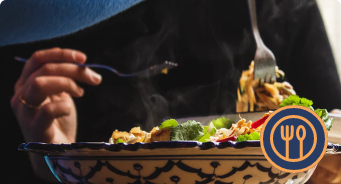
Enjoy a delightful meal prepared, especially for you by your local host as they share the stories about the Neighbrhood and their personal adventures.
The experience includes:

Feast on the flavors of authentic cuisine and the stories about the Neighbrhood and a personalised walkaround by the host.
The experience includes:
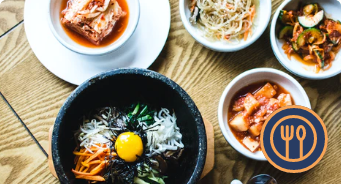
Indulge in a gourmet experience, served by a local host, with a 3-course meal and personalised walkaround and sightseeing of the Neighbrhood peppered with the stories and cultural anecdotes.
The experience includes:
*Conditional on the basis of availability of the said personalities.

If you are looking to experience the food culture


If you are a Host